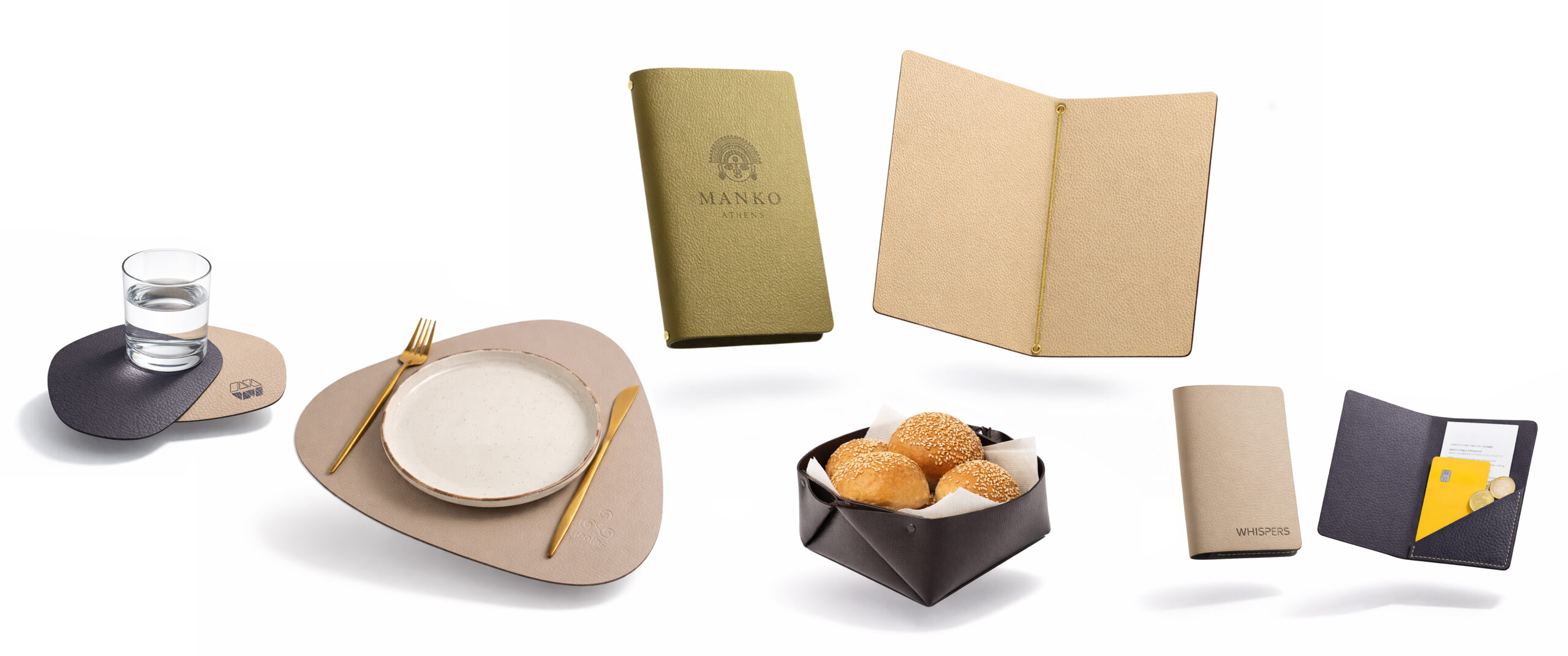
6 print essentials for your restaurant. Because getting them wrong quietly costs you.
6 Print Essentials Every Restaurant, Café & Bar Must Have
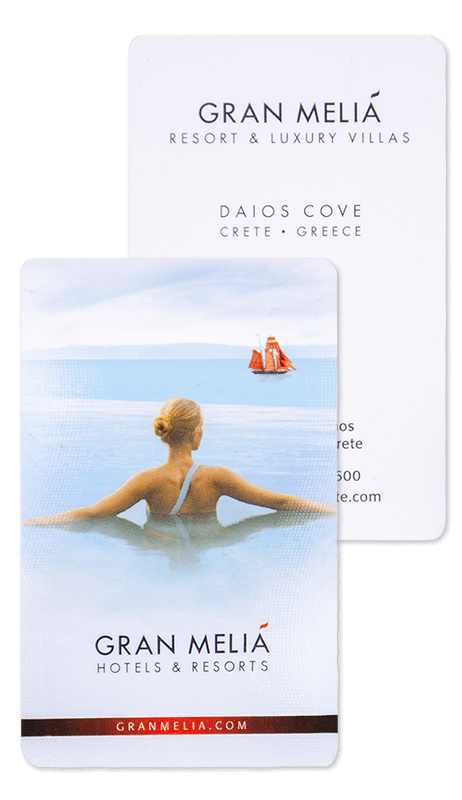
It was 2011 when Daios Cove called us with a request: to handcraft hard-cover menus from PU leather. We had a brush, some glue, a bone folder and a cutting knife. That was it. Christos, our founder, didn’t overthink it. He’d always believed that if someone else had done something, he could do it too. So we made the menus, piece by piece. And somewhere in that process, we understood something that’s driven everything since: in hospitality, the objects on a table carry more weight than people realise.
We’ve supplied Four Seasons, One&Only, Aman Resorts, Buddha Bar and many more since then. And we keep seeing the same pattern: owners who’ve perfected the kitchen, the décor, the team, then walked straight past the table. Treated it like a logistics checklist rather than part of the experience.
These six items are the ones that come up again and again, because they work and because getting them wrong quietly costs you more than you’d expect.
Menu Covers
The Handshake Before Anyone Speaks
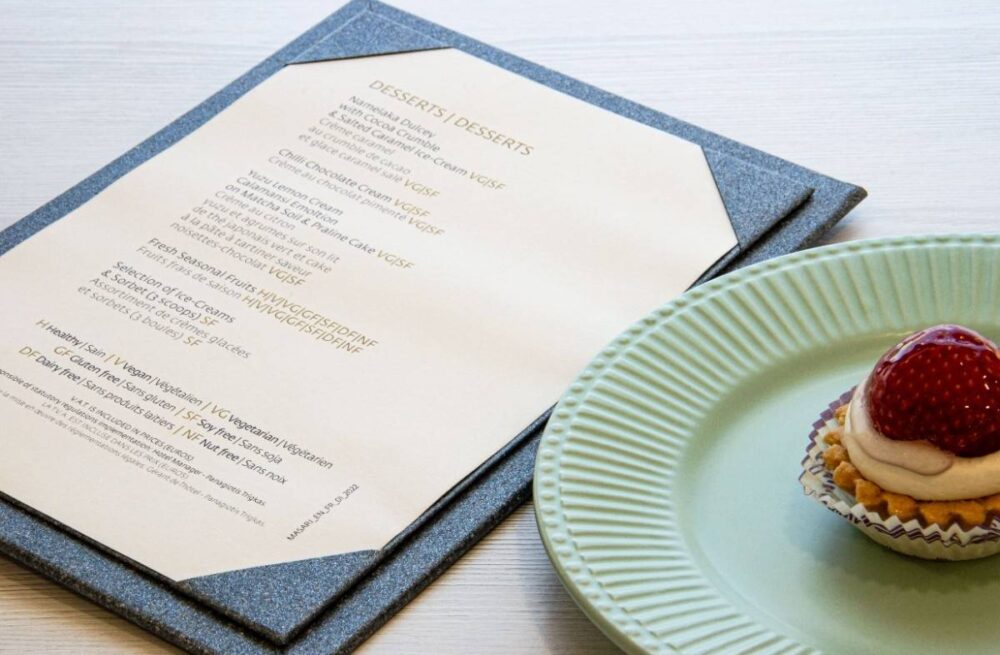
A physical menu is not just a list of dishes, it’s a gesture. Handing someone something to hold, something with weight and texture, changes the dynamic at the table. It invites a conversation: what’s good tonight, what do you recommend, tell me about this. That conversation is where hospitality actually happens. Around 2020, a wave of restaurants switched entirely to QR codes and got rid of physical menus. Some of them quietly switched back within eighteen months. A QR code on a phone ends this conversation before it starts.
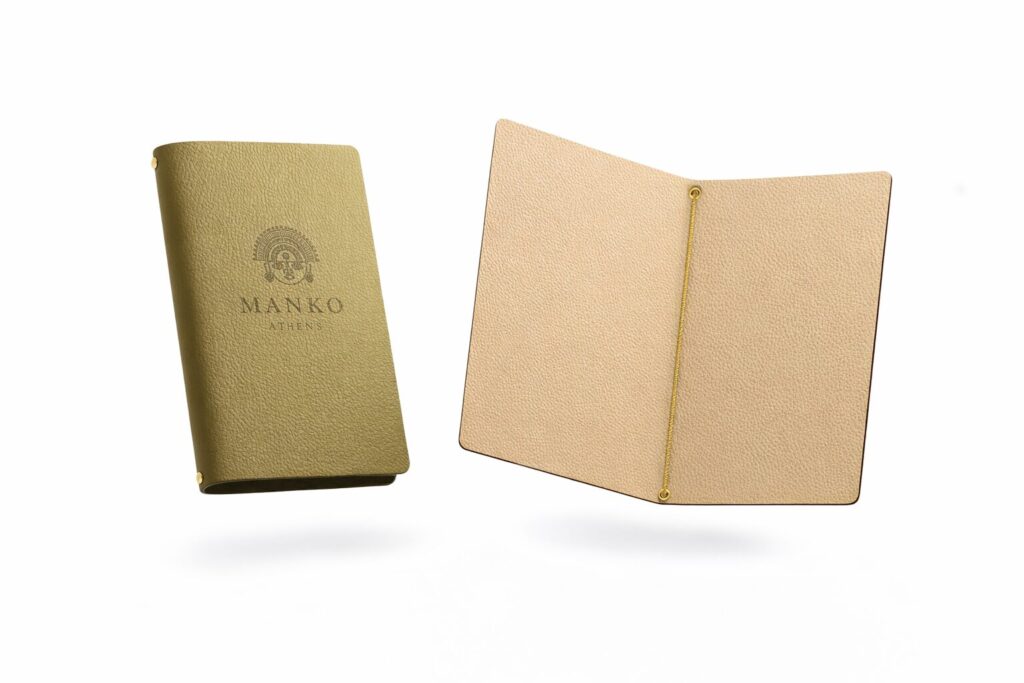
We’ve made menu covers in genuine and PU leather, natural linen, recycled materials, paper, wood. What stays consistent is the impact of getting the first touch right. Guests notice from the second they pick the menu up.
If your current menu cover is something you’re not proud of, that’s the first thing worth fixing.
Placemats
What the Table Feels Like
Before Food Arrives
What the Table Feels Like Before Food Arrives
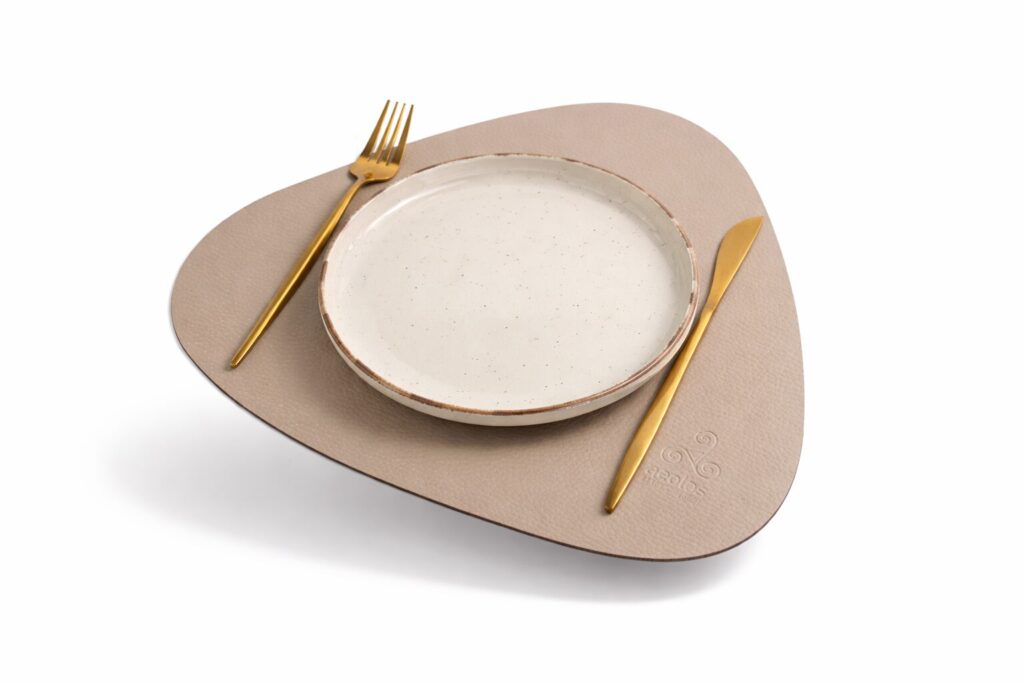
A client of ours, a restaurant group in Athens, told us they’d never bothered with placemats. Didn’t see the point. Then they did a soft relaunch with a new table set and their average spend went up. They’re not sure exactly why. We think we know.
Placemats change the feeling of a table before a single dish arrives. They give each guest a defined space, a clear sense that this area belongs to them. They add texture and warmth to what can otherwise feel like a cold or impersonal surface.
For family restaurants, they’re close to essential. They give children something to focus on, and parents read the gesture correctly: this place thought about us. That’s not a small thing when you’re trying to build a loyal, returning clientele.
If you’re skipping placemats to save on cost, the table will show it.
Browse the range
Coasters
The One Item That Keeps Working
After Guests Leave
The One Item That Keeps Working After Guests Leave
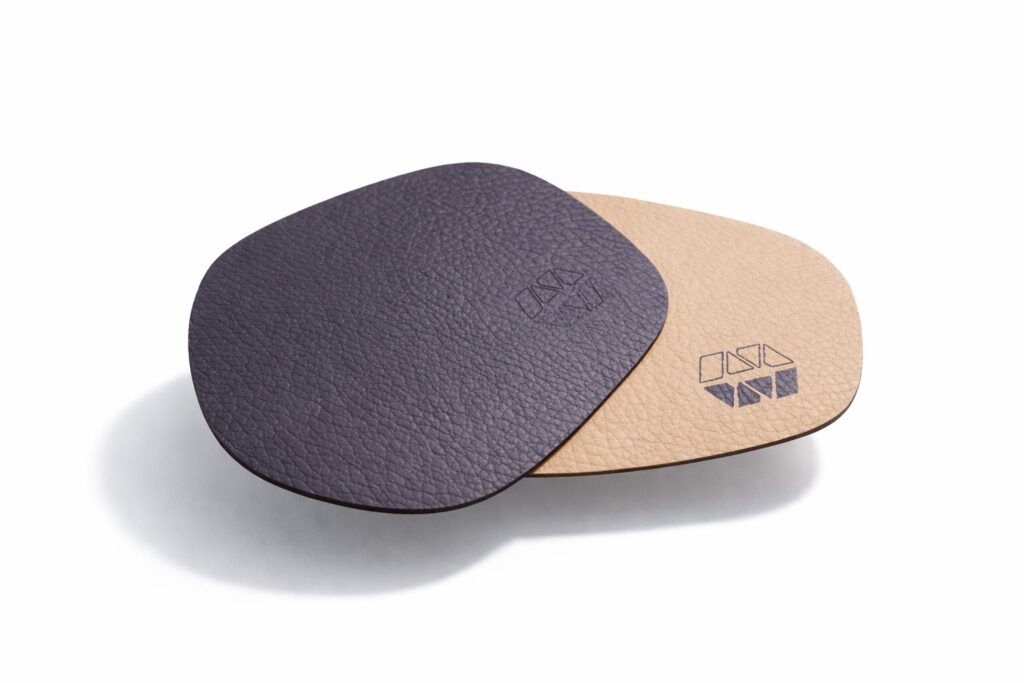
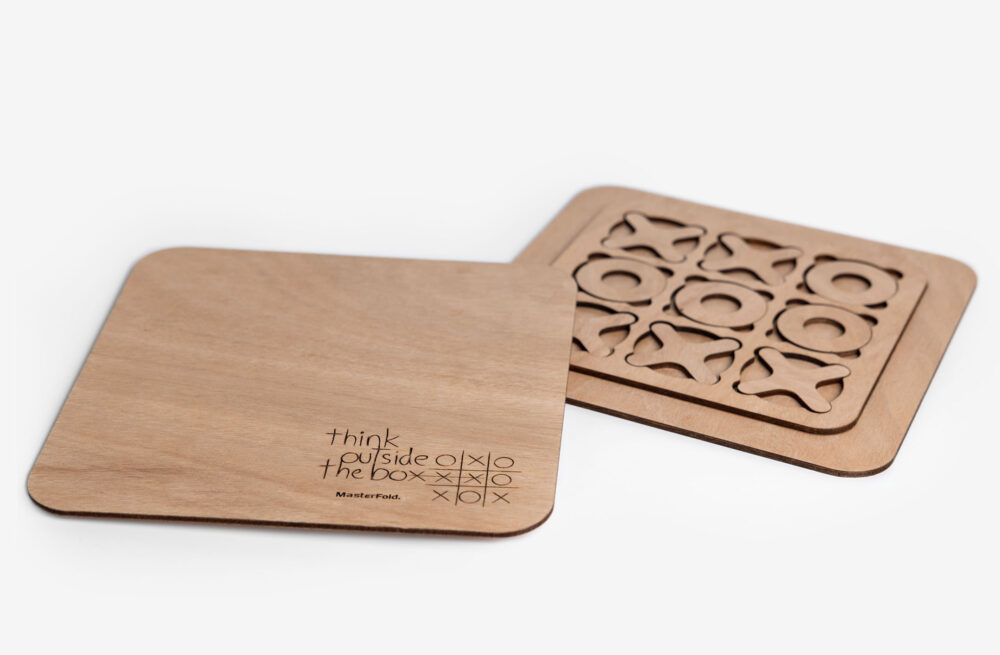
We know a bar owner who still gets tagged on Instagram from coasters that left his venue two summers ago. A guest took one home, left it on their coffee table, a friend photographed it, posted it. Three years of unpaid visibility from an object that costs less than a coffee to make.
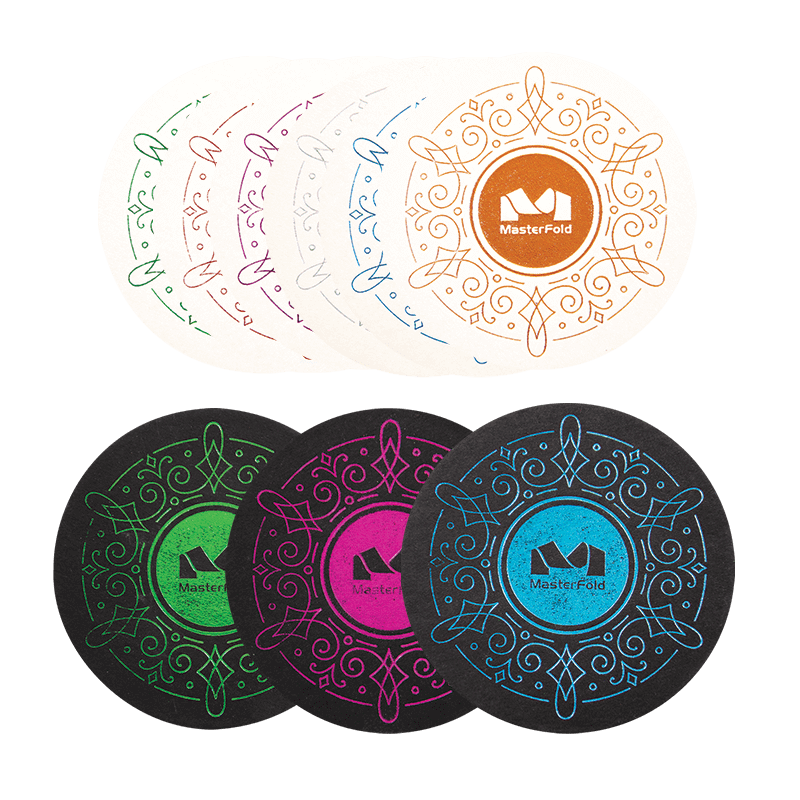
Coasters sit in front of your guest from the first drink to the last. Your logo, your color, your mark, right there the whole time.
At a bar especially, they signal attentiveness: this place is paying attention. A bar without them is a bar cutting corners and regulars notice that faster than you’d think.
The unit cost is low, the exposure per visit is constant and the ones that travel home with guests carry your brand into kitchens, offices and dining tables you’d never reach otherwise. Items on this list have a longer return for what they cost.
Custom coasters
Bread Baskets
The Part of the Meal Nobody Talks About
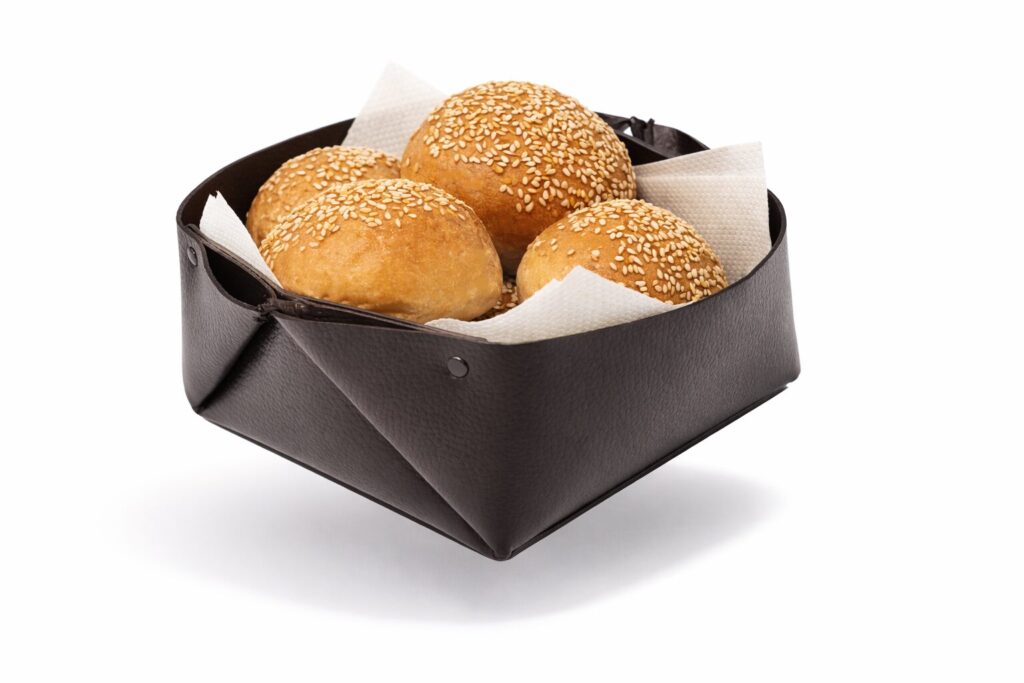
There’s a window between when guests sit down and when the first course arrives that most restaurants don’t think about enough. It’s not long, ten or fifteen minutes at most but it’s enough time for the table to feel either warm or awkward. The bread basket is a big part of what determines which.
It’s practical: guests need something to do while they wait, something that signals the meal has begun, something that justifies the room around them. Bread does that. It always has.
What changes the quality of that moment is how it’s presented. The same bread in a paper bag versus a well-made basket is a measurably different experience, not because of the bread, but because of what the basket communicates about the care you bring to everything else. Guests read those signals faster than they’ll ever tell you.
See our bread basket
Bill Folders
The Finish Line Matters
We’ve watched restaurants spend months perfecting the menu and then hand over the bill in a plain paper folder, or worse, nothing at all. It’s a strange place to stop caring. The last moment of a meal is the one people carry home. It colors the whole memory of the evening.
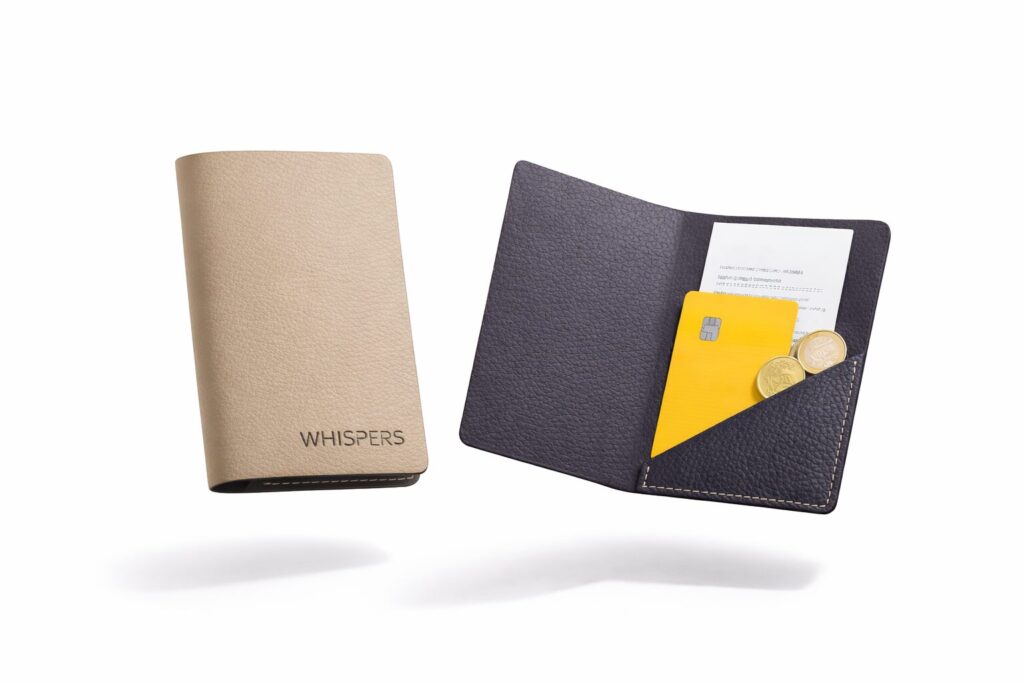
A bill folder handles the payment moment the way it deserves: quietly, discreetly and with the same level of finish as everything else on the table. It tells your guest that you thought about this part too. That you didn’t stop when the dessert plates were cleared.
For a date, a business dinner, a birthday, that closing moment carries real weight. A folder gives you a way to close it properly. The guests who feel looked after all the way to the end are the ones who come back and the ones who bring others.
QR Stands
When Print and Digital Stop Arguing
The print-versus-digital conversation in hospitality ran for about five years and resolved itself in the most practical way possible: the restaurants that work well use both.
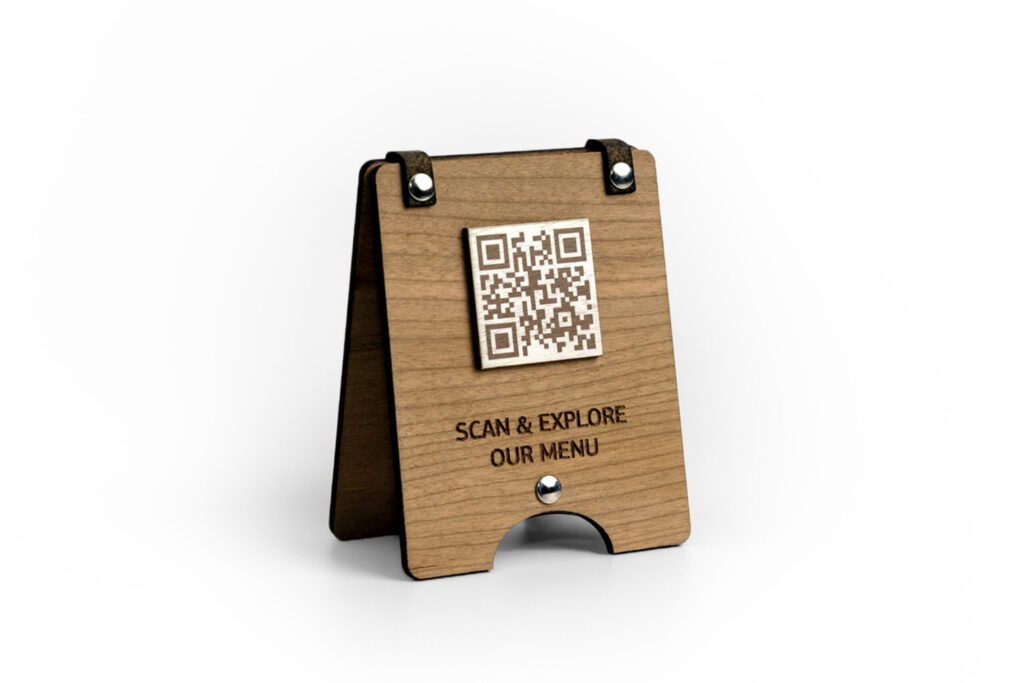
The menu cover handles the menu and the wine list. That’s where the tactile experience matters. While the QR stand handles everything else: Google reviews, social media, promotions, reservations. A QR stand on the table gives guests instant access without pulling a team member away from the floor. In a busy service, that’s a genuine operational win. And for driving reviews and social engagement, a well-placed stand at the right moment in the experience is one of the simplest tools you have.
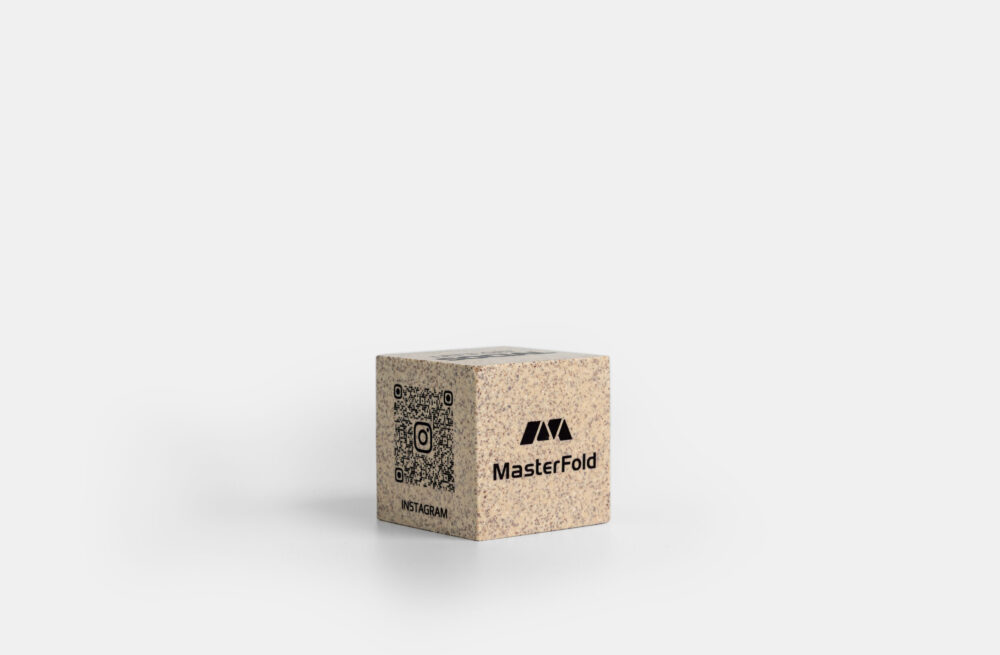
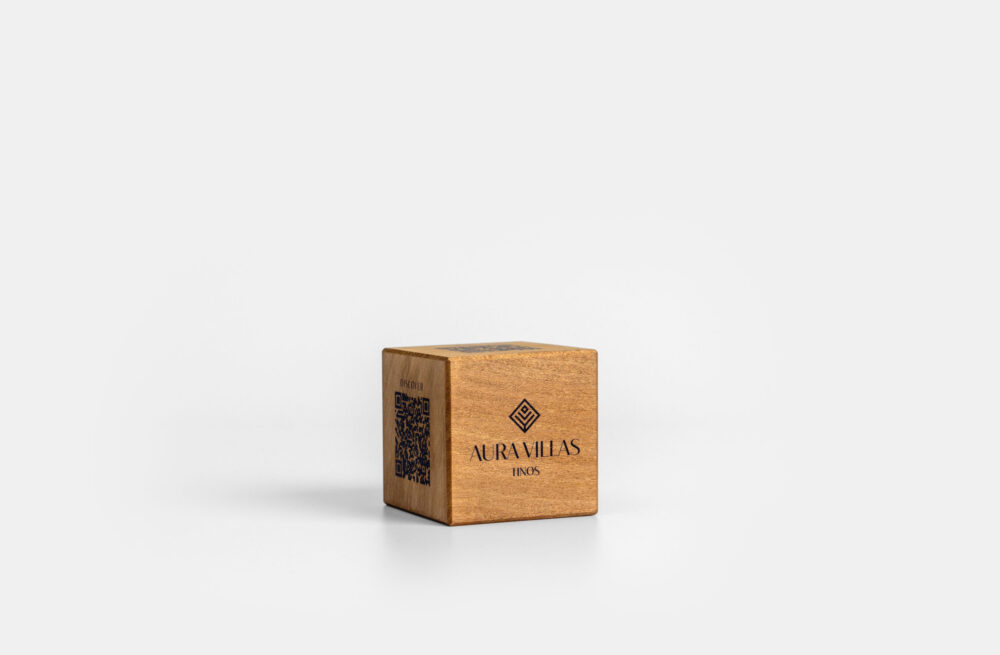
Where most restaurants go wrong is in the stand itself. An acrylic piece from a generic catalogue sits on your table like an apology. A stand made in wood or sustainable materials, sized and finished to match the rest of your table set, becomes part of the design rather than an interruption to it. The QR code works either way. What the object says about you does not.
QR stands
How We Actually Build These for Clients
Nobody comes to us wanting six separate items. They come with a restaurant that needs to feel more considered, a rebrand in progress or a new opening that has to land well.
We start by understanding the space: the interior, the guest profile, the brand, what the owner actually cares about. From there we build a set where every piece speaks the same language. Materials chosen together. Finishes that reference each other. Colors that work with the room as it actually is, not against a white background in a catalogue.
Most clients arrive with a rough direction and leave with something more distinctive than they expected. That tends to be how it goes.
If you want to start that conversation, this is where it begins
A table set that works as hard as your kitchen does.
Tailored to your guests.
Built to your standard.
Your competitors won’t enjoy it.
Frequently Asked Questions
What items should every restaurant table have?
The core set we recommend: menu cover, placemats, coasters, bill folder. Add a bread basket and a QR stand and every touchpoint from arrival to payment has something intentional behind it. Most clients start with two or three and build from there.
Do guests still prefer physical menus over QR codes?
A significant portion do, particularly in premium settings and among guests who came out for an experience rather than just a meal. A physical menu also opens a conversation with staff that a phone screen tends to close down. The best approach for most restaurants is a combination of both.
How do table accessories improve the guest experience?
They signal that someone thought about the details. Guests may not be able to name exactly what made the table feel right, but they notice. That feeling shapes whether they remember the evening as an experience worth repeating and whether they recommend it to someone else.
What does a bill folder actually do for a restaurant?
It handles the payment moment with the discretion and finish it deserves. The bill is the last physical thing your guest interacts with. A bill folder makes sure that moment doesn’t quietly undo everything that came before it.
Why do coasters matter for restaurant branding?
They keep your brand in your guest’s eyeline throughout the visit and frame every drink on the table. Beyond that, guests take them home. A well-made coaster ends up in kitchens and offices long after the visit, carrying your brand into spaces you’d never reach with paid advertising. The unit cost is low, the reach isn’t.
You might also need
-

Eco Blend QR Cube
0,00 € Select options This product has multiple variants. The options may be chosen on the product page -

Essential Wooden QR Cube
0,00 € Select options This product has multiple variants. The options may be chosen on the product page -

Superfine Paper Lunch Box
0,00 € Select options This product has multiple variants. The options may be chosen on the product page -

Kraft Paper Lunch Box
0,00 € Select options This product has multiple variants. The options may be chosen on the product page -

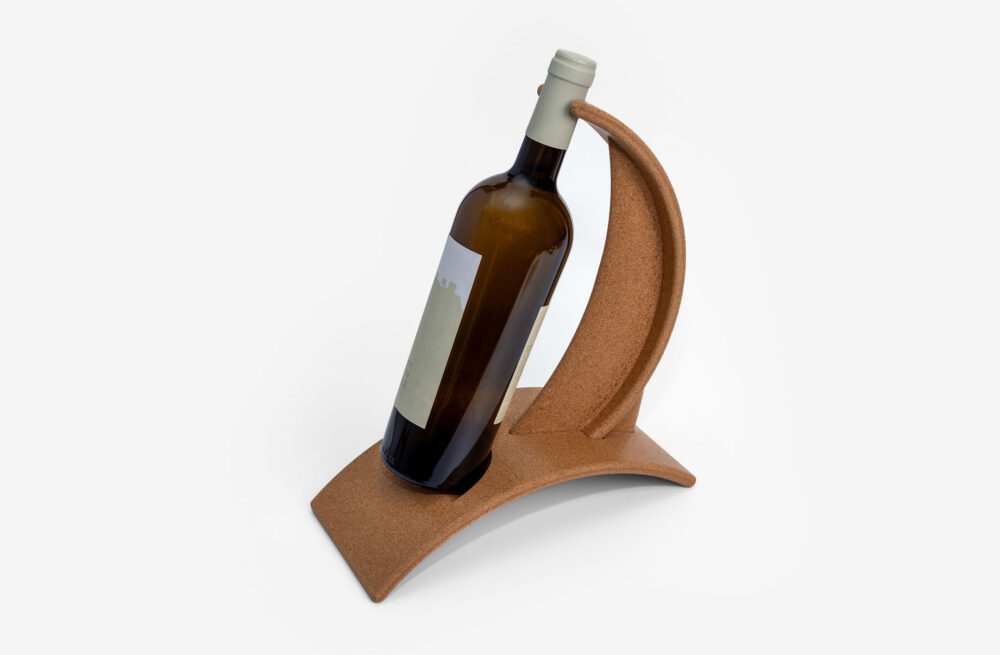
Wave Wine Holder
0,00 € Select options This product has multiple variants. The options may be chosen on the product page